10 Best AI Rank and Brand Tracking Tools in 2026
Keeping tabs on your digital footprint is no longer a simple matter of checking Google rankings or monitoring social media mentions.
![Leading Enterprise GEO Tools With Multi-Brand Tracking and Competitor Benchmarking [2026 Comparison] - Daily Emerald](https://img.freepik.com/premium-photo/seo-search-engine-optimization-promoting-ranking-traffic-website-optimizing-your-website_1006743-1462.jpg)
In 2026, discovery is increasingly shaped by AI systems, where large language models (LLMs) and AI search engines decide which brands get surfaced, cited, or ignored entirely.
This shift has made 10 Best AI Rank and Brand Tracking Tools in 2026 a critical topic for marketers, SEO professionals, and brand managers who want to stay visible in both traditional search and AI-generated answers.
What Is AI Rank and Brand Tracking?
AI rank and brand tracking refer to the process of monitoring how your brand performs across AI-driven search environments and language models.
AI rank tracking focuses on visibility inside AI search systems. Instead of only checking Google positions, it shows how often your pages appear in AI-generated answers, which prompts trigger your content, and how your visibility changes when algorithms or competitors shift.
It also helps detect when your rankings decline or when a competitor begins dominating AI-generated responses.
AI brand tracking, on the other hand, focuses on perception. It monitors how your brand is mentioned across LLMs, news platforms, blogs, forums, and social channels. It evaluates whether those mentions are positive, neutral, or negative, and flags misinformation or reputational risks early.
Together, they form a complete visibility system: one measures discoverability, while the other measures reputation.
Why AI Rank and Brand Tracking Matters in 2026
Online visibility is no longer just about being searchable; it’s about being selectively surfaced by AI systems. That changes everything.
AI rank and brand tracking tools matter because AI-driven discovery is now a primary gateway to information.
When users ask questions, they often receive synthesized answers instead of browsing multiple websites. If your brand is not included in those responses, you effectively become invisible in that interaction.
Perception is equally important. AI systems often summarize and reframe brand narratives based on existing data across the web. Without monitoring, misinformation or outdated descriptions can quietly spread.
Real-time insights also play a major role. Instead of manually checking rankings or scanning mentions, these tools continuously analyze large datasets and highlight shifts instantly, saving time while improving decision-making speed.
Finally, competition is intensifying. Brands that actively track AI visibility gain a strategic edge by identifying gaps, spotting emerging trends, and adjusting content before competitors even react.
7 Best AI Rank and Brand Tracking Tools in 2026
Here are some of the best AI rank and brand tracking tools in 2026:
1. Nightwatch
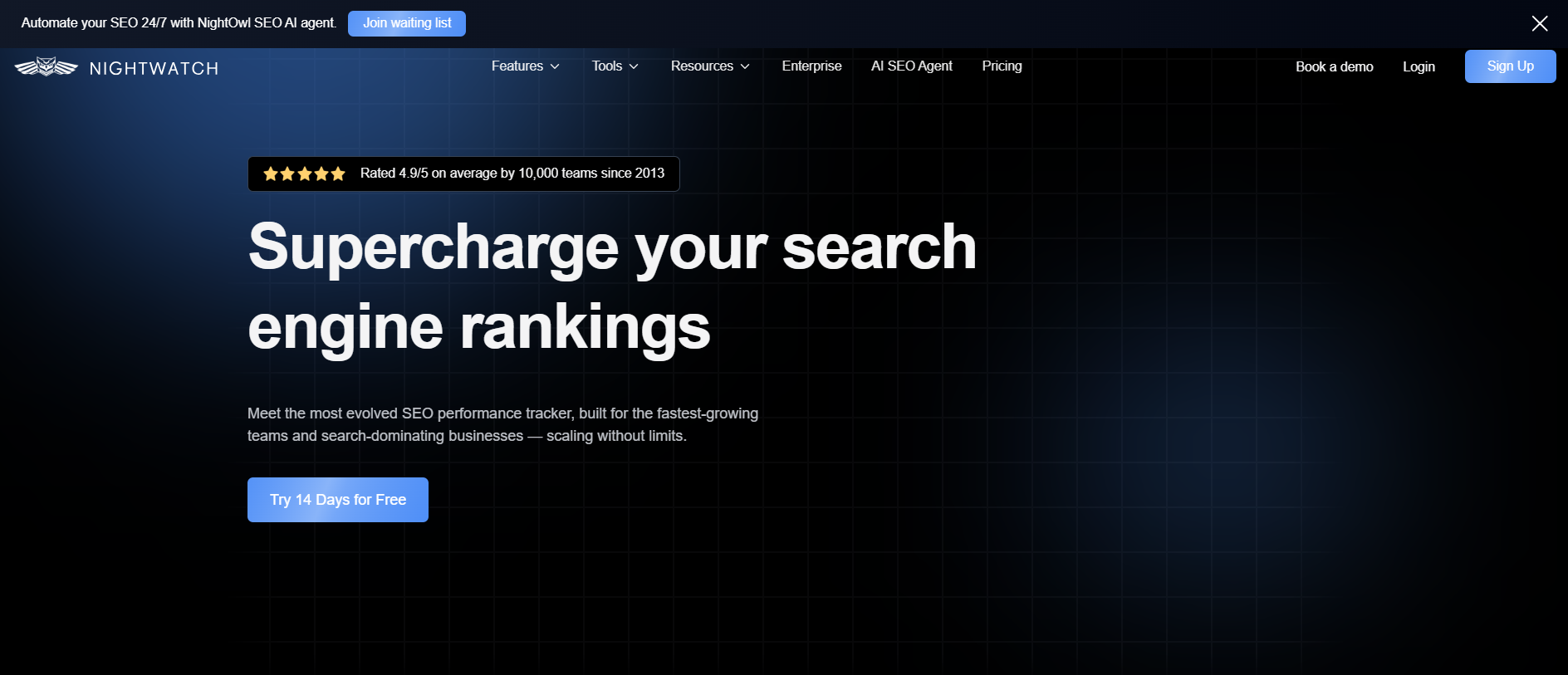
Nightwatch is widely regarded as one of the most comprehensive platforms in the 10 Best AI Rank and Brand Tracking Tools in 2026 category because it doesn’t limit itself to surface-level visibility tracking.
Instead, it operates across multiple layers of AI and search intelligence, giving brands a deeper understanding of how they appear in both traditional search engines and AI-generated environments.
What makes Nightwatch distinct is its ability to track not only LLM outputs but also the actual search queries AI systems run when retrieving real-time information.
This means you are not just seeing final AI-generated responses; you are also seeing the investigative steps behind them. From prompt-level performance to citation sentiment, Nightwatch gives you visibility into the full decision chain that shapes AI answers.
The platform merges LLM monitoring, SEO rank tracking, prompt research, AI search tracking, and citation-level sentiment analysis into a unified system. It also integrates traditional search data, allowing you to compare your performance across Google, Bing, and AI tools like ChatGPT, Claude, and Perplexity.
With Nightwatch, visibility is tracked across multiple dimensions. You can see how specific prompts surface your brand, how different AI models interpret your content, how AI systems retrieve information from the web, and whether your brand appears in AI Overviews or local AI search results.
In practice, this includes prompt-level tracking that reveals how your keywords behave inside AI queries, model-level analysis that compares performance across different LLMs, and AI search monitoring that exposes the real-time web searches executed by AI engines.
It also extends into local visibility tracking and automated alerts whenever ranking or citation shifts occur.
Nightwatch stands out because it connects all these signals into a single narrative rather than fragmented dashboards. For marketers, this creates a clearer understanding of how AI systems “think” about your brand.
Its strengths lie in combining AI visibility tracking with traditional SEO, offering prompt research insights, global rank tracking across massive location datasets, citation sentiment analysis, SERP breakdowns, and collaborative reporting tools that work well for agencies and teams. The addition of Google integrations further strengthens its analytical depth.
2. Otterly AI
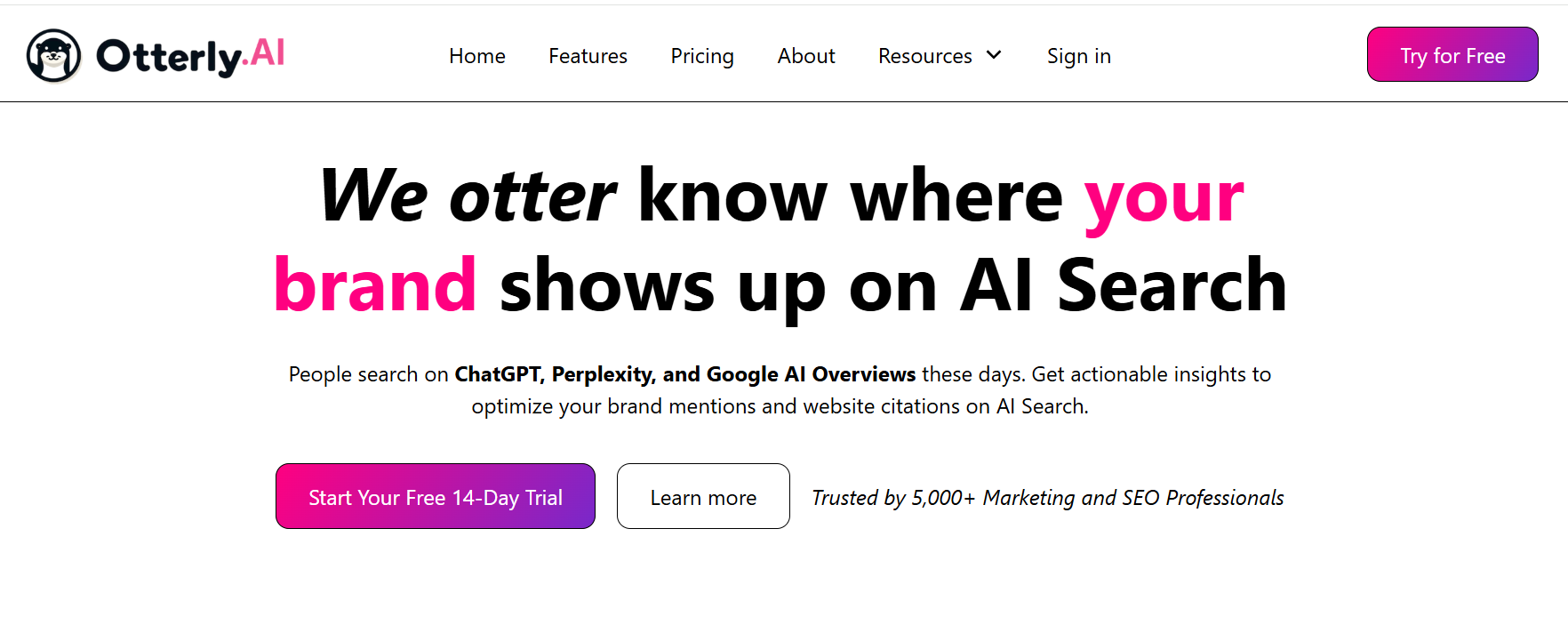
Otterly AI focuses specifically on how brands appear within AI-generated search environments. Rather than traditional SEO rankings, it tracks visibility inside systems like ChatGPT, Gemini, Perplexity, and Microsoft Copilot, making it highly relevant in the AI-first search era.
Its core strength lies in monitoring brand mentions, link citations, and sentiment across AI outputs. This allows marketers to understand not just whether they appear in AI responses, but how they are represented when they do.
Otterly AI also tracks keyword behavior inside prompts, showing how AI systems pull from your content when generating answers. It then compiles this into structured insights that help brands refine content strategy and improve visibility.
One of its key advantages is automation. Instead of manually checking AI tools, Otterly continuously monitors them, saving time while surfacing actionable insights.
However, its focus is primarily on AI visibility rather than full SEO coverage. While this makes it strong in its niche, it may require pairing with traditional SEO tools for a complete strategy.
Pricing starts with entry-level plans for small-scale tracking and scales into higher tiers designed for large organizations that require extensive prompt and sentiment monitoring.
3. Keyword.com AI Tracker
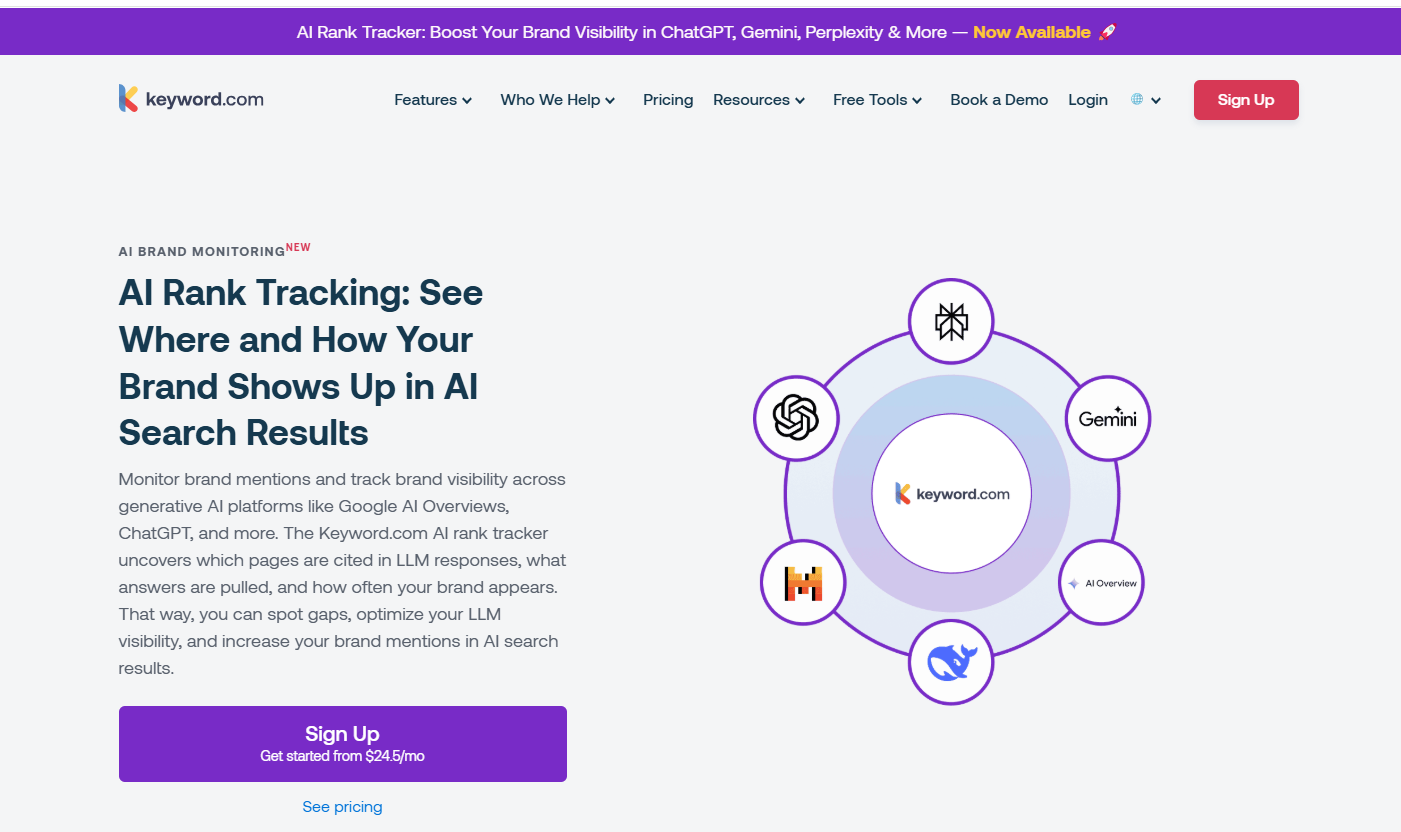
Keyword.com AI Tracker is designed to show exactly how and where your content is being cited inside AI-generated responses. It shifts the focus from traditional ranking positions to citation visibility inside LLM outputs.
This tool helps you understand which pages are being referenced by systems like ChatGPT and other AI engines. It also tracks how often your content appears in AI answers and how it performs compared to competitors.
Instead of guessing how AI systems interpret your website, Keyword.com provides structured visibility into real citation behavior, allowing marketers to adjust content strategies accordingly.
Its biggest strength is clarity. You can quickly see which pages are gaining traction inside AI systems and which ones are being ignored.
The platform is lightweight compared to full SEO suites, but this also makes it more focused. It is ideal for teams that want a clear view of AI citations without unnecessary complexity.
Pricing begins at lower entry tiers, with advanced plans available for agencies and enterprises needing deeper reporting and tracking capabilities.
4. Scrunch AI
Scrunch AI goes beyond simple mention tracking by focusing on how AI systems interpret and cite your brand. It analyzes not just where your brand appears, but how it is represented across different AI platforms.
The platform tracks mentions, citation behavior, and sentiment across LLM environments. It also compares your visibility against competitors, giving you a clearer sense of positioning in AI-driven ecosystems.
Scrunch AI is particularly useful for understanding narrative control. It shows whether AI systems describe your brand accurately or distort your messaging based on external data sources.
Its dashboards are designed for clarity, helping users quickly identify trends and shifts in brand perception.
However, it does not offer deep traditional SEO tracking, which means it works best when paired with other analytics platforms.
Pricing is positioned in the mid-to-premium range, with plans scaling based on prompt volume, personas, and audit depth.
5. Profound AI
Profound AI is built primarily for enterprise-level AI visibility tracking. It focuses exclusively on how brands appear within LLM-generated responses and AI search environments.
The platform monitors mentions, citations, and sentiment across AI systems, helping large organizations understand how they are represented in generative outputs.
However, it does not include traditional search engine tracking, prompt research, or detailed citation-level breakdowns. This limits its usefulness for teams that want a full-stack SEO and AI visibility solution.
Its strength lies in specialization. For enterprises focused purely on AI model representation, it provides structured insights and reporting tools designed for scale.
On the downside, pricing is significantly higher than most alternatives, making it less accessible for smaller businesses.
Plans typically start at premium monthly rates and scale upward based on enterprise requirements and customization needs.
6. Brand24
Brand24 is one of the most established tools in the digital monitoring space, offering real-time tracking of brand mentions across social media, blogs, forums, news sites, and increasingly, AI-driven environments.
Its strength lies in its ability to capture conversations as they happen. This allows brands to respond quickly to emerging sentiment trends, reputational risks, or viral discussions.
Brand24 also integrates sentiment analysis, helping users understand whether mentions are positive, neutral, or negative. This adds an emotional layer to raw mention tracking.
Additionally, it provides influencer scoring, competitor benchmarking, and automated alerts that help teams stay proactive rather than reactive.
While powerful, it can become expensive for smaller teams and does not offer deep keyword tracking capabilities compared to SEO-specific platforms.
Pricing starts at mid-range tiers and increases depending on keyword limits and team size.
7. Hall AI
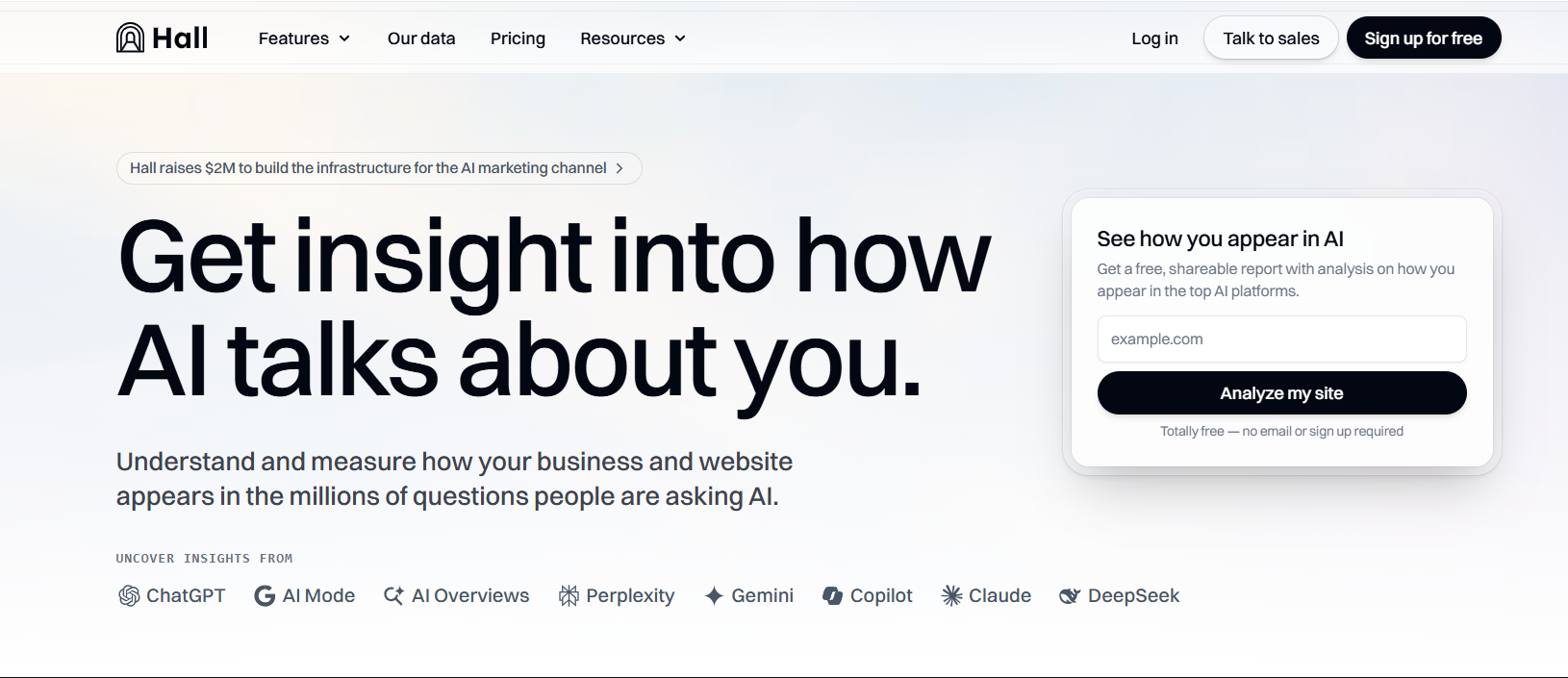
Hall AI is designed for users who want a simplified entry point into AI search visibility tracking. It focuses on how brands appear inside LLMs and AI search systems, making it highly relevant in modern SEO environments.
The platform tracks mentions, citation behavior, and keyword performance across AI systems, then presents this data in an easy-to-understand dashboard.
What makes Hall AI valuable is its focus on interpretation. It doesn’t just show where your brand appears; it explains why it appears there and what triggers AI systems to cite your content.
This makes it especially useful for marketers who want actionable insights without complex analytics layers.
However, it has limited traditional SEO coverage, and pricing may require consideration for smaller teams depending on usage scale.
Plans start at entry-level pricing for smaller projects and expand into higher tiers for agencies and larger organizations managing multiple tracking environments.
8. Peec AI
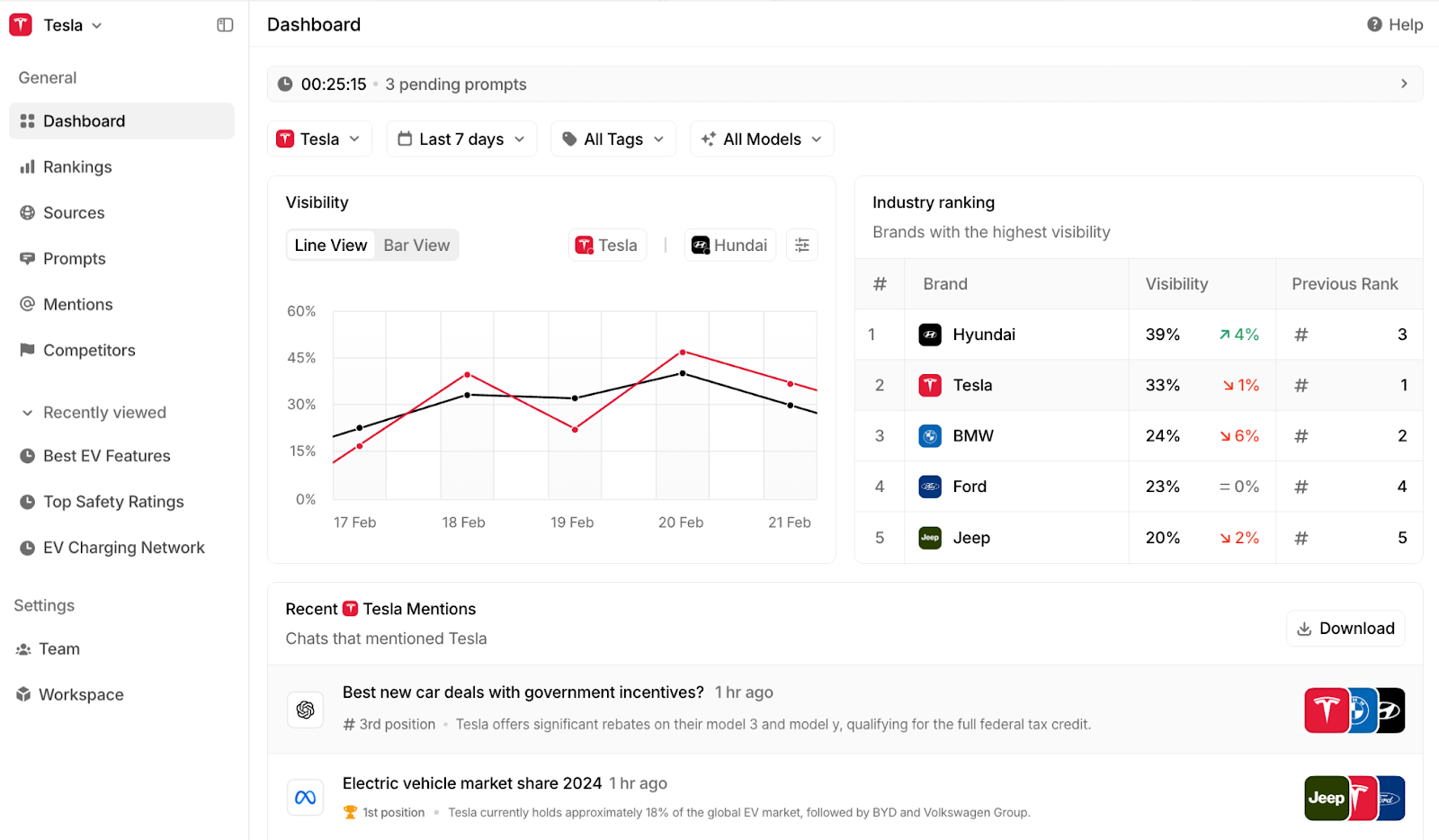
Peec AI is designed as a clean, marketing-focused analytics layer for AI search visibility. It positions itself around one core idea: helping teams understand how often they are cited inside AI-generated answers and how that visibility changes over time across platforms like ChatGPT, Perplexity, and Google AI Overviews.
Where Peec AI stands out is in its clarity. Instead of overwhelming users with overly technical dashboards, it translates AI visibility into simple trendlines, prompt performance insights, and competitor comparisons.
This makes it especially useful for marketing teams that need to report AI visibility without relying on data engineers or complex tooling setups.
At its core, Peec AI is built for structured decision-making. It allows teams to monitor how prompts behave across different categories and how competitors are gaining or losing visibility within those same AI-generated environments.
This makes it easier to identify shifts in momentum rather than just static rankings.
In practical use, many teams organize their strategy around clustered prompts. These are grouped by product category, customer intent, and adjacent topics.
From there, visibility is tracked across three layers: branded prompts, category-level prompts, and competitor prompts. Over time, this reveals which sources AI systems consistently rely on when forming answers.
One of the most useful workflows involves exporting top cited domains from category prompts on a weekly basis.
These domains often become strategic targets for partnerships, digital PR, and content gap fixes. In this way, Peec AI is not just a tracking tool but also a directional input system for content strategy.
Peec AI is particularly strong for growth teams that need scalable monitoring across multiple markets, especially when operating internationally. It also supports daily tracking intervals, allowing teams to observe momentum shifts as they happen rather than waiting for monthly reports.
9. Akii
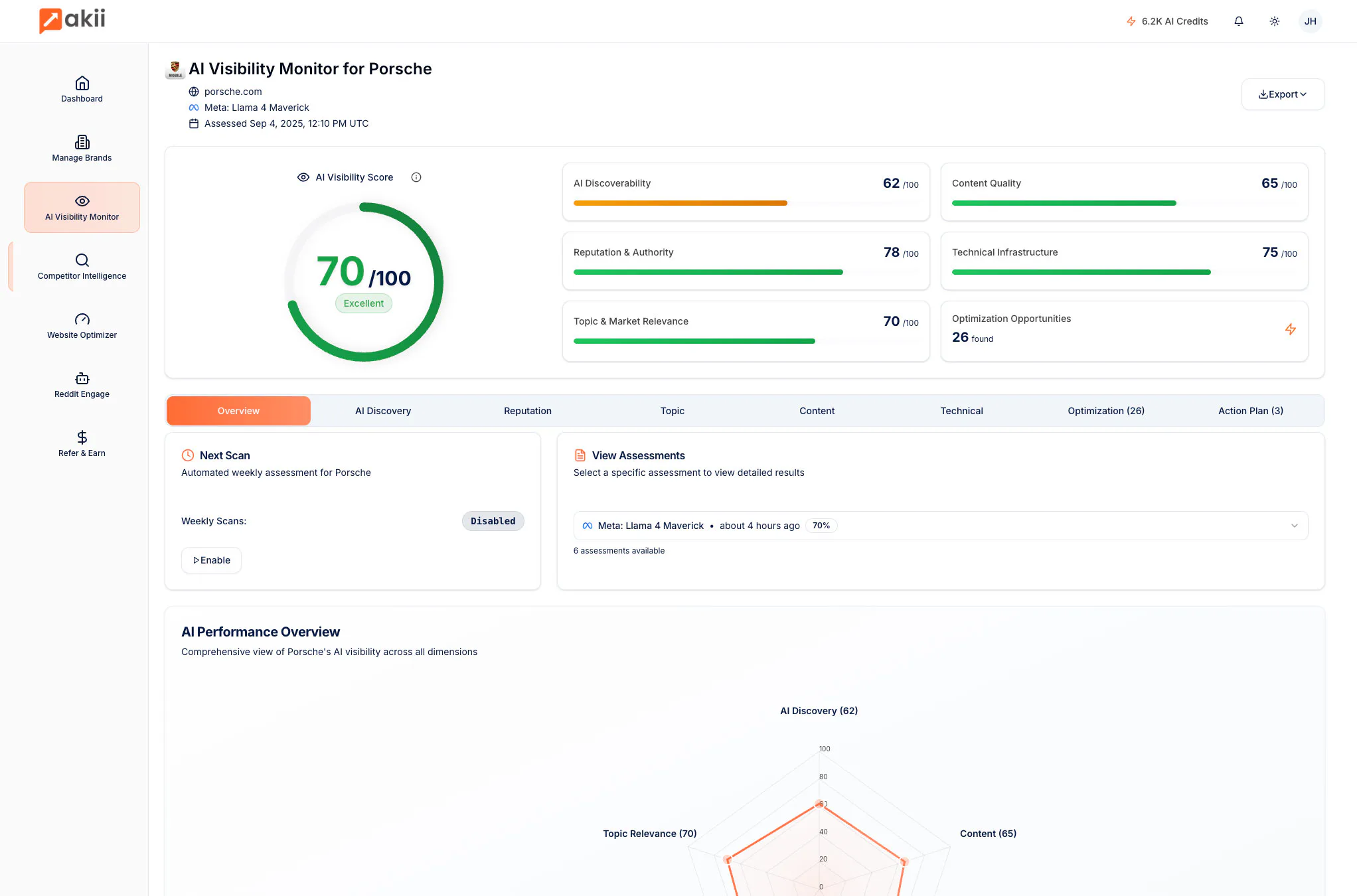
Akii takes a slightly different approach compared to most AI tracking tools. Instead of only focusing on visibility measurement, it combines monitoring with optimization guidance.
Its core positioning revolves around helping brands understand not just where they appear in AI systems, but why they appear there and how to improve that positioning.
The platform introduces a “visibility score” model, which acts as a central benchmark for performance.
This score is then broken down into diagnostic layers that explain how AI systems like ChatGPT, Gemini, Copilot, Perplexity, and Google AI interpret and recommend a brand.
This scoring approach makes Akii particularly appealing to teams that want a single, easy-to-communicate metric for stakeholders. Rather than interpreting raw citation data, decision-makers can focus on a simplified performance indicator that reflects overall AI visibility health.
Akii is also known for its emphasis on real-time analysis. Instead of relying heavily on cached or delayed snapshots, it focuses on live evaluations of how AI systems currently respond to prompts.
This gives teams a more immediate understanding of shifts in perception and recommendation patterns.
In practical terms, Akii is often used as a diagnostic entry point. Teams typically begin with a baseline visibility audit, which reveals how the brand is currently represented across AI systems. From there, competitive comparisons highlight which competitors are dominating specific query spaces and why.
Once gaps are identified, optimization work begins. This often includes improving pages that are likely to be cited, adding structured content such as FAQs, refining comparison pages, and integrating machine-readable elements like structured markup.
The goal is not only to track visibility but to actively improve it over time.
Akii is especially useful for growth-stage SaaS companies, agencies, and teams building their AI visibility strategy from scratch. It is less suitable for teams that only want lightweight citation tracking without deeper optimization layers.
Pricing typically starts at around $49 per month for its Starter plan, making it one of the more accessible tools in the category.
10. PromptMonitor
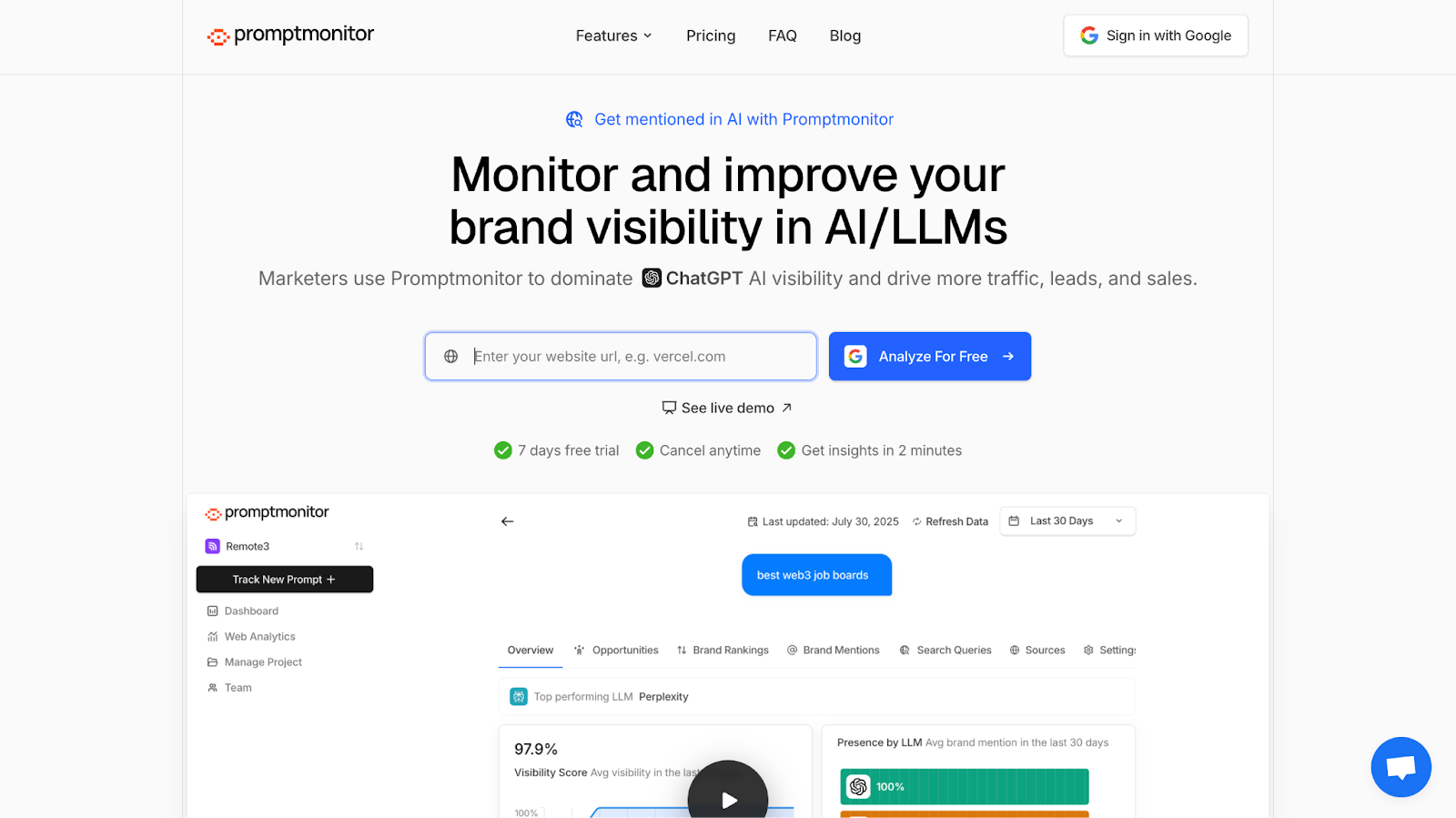
Promptmonitor is built for teams that want broad, practical coverage of AI model visibility without entering enterprise-level pricing structures.
It tracks how brands appear across multiple AI systems, including ChatGPT, Claude, Gemini, Perplexity, DeepSeek, Grok, and AI Overviews.
Its main appeal lies in accessibility. Promptmonitor offers a low-friction entry point with a free trial and affordable starter plans, making it especially attractive to SMBs and agencies managing multiple clients or projects simultaneously.
Unlike more specialized tools, Promptmonitor focuses heavily on operational visibility workflows. It allows teams to set up structured projects where prompts can be grouped into brand-level and category-level segments.
Competitors can also be included within the same prompt sets, making it easier to observe direct visibility displacement over time.
One of the key workflows involves exporting top cited domains on a weekly basis. These domains are then used to build a “source targeting list,” which informs both content creation and outreach strategy.
This helps teams connect AI visibility data with actionable SEO and PR execution.
Promptmonitor also includes tracking of AI search bots and crawler activity, which adds an additional layer of insight into how AI systems are discovering content in the first place. This is particularly useful for teams trying to understand not just outputs, but inputs into AI-generated responses.
While it provides strong coverage for its price point, it does have limitations. It is not designed for complex enterprise BI integrations, and it may not meet the requirements of highly regulated organizations with strict procurement or security frameworks.
Pricing starts at approximately $29 per month for its Starter plan, with higher tiers offering increased prompt limits and broader tracking capacity. A 7-day free trial is also available, although there is no permanent free tier.
Related Searches: