Modern Marketing vs Traditional Marketing
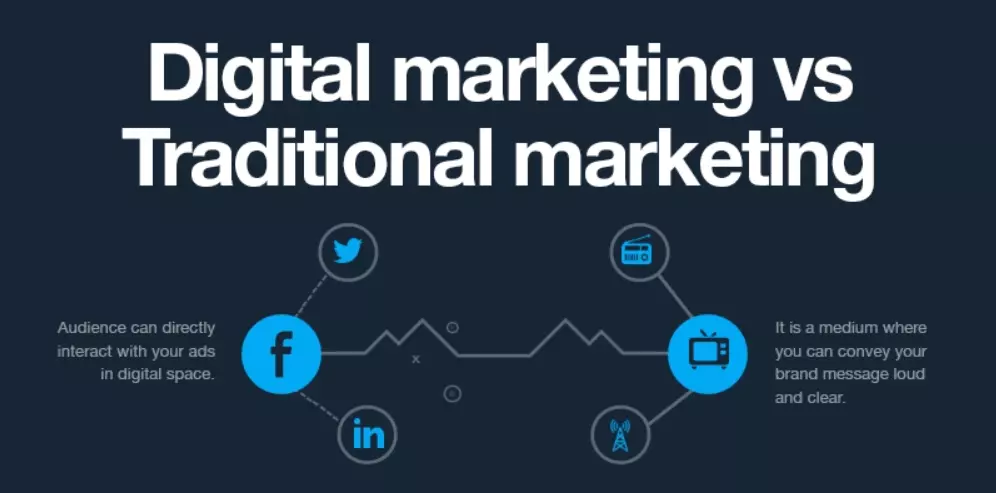
Marketing has always been essential for business growth, but the way brands reach and influence customers has changed dramatically over time.
With rapid technological advancements and widespread internet access, modern marketing has become the dominant force for most businesses. However, traditional marketing still holds value in certain industries and audiences.
Today, businesses are no longer choosing between visibility and engagement alone; they are choosing between physical reach and digital precision.
Traditional marketing relies on offline channels to promote products, while modern marketing leverages data, automation, and digital platforms to connect with targeted audiences in real time.
Understanding both approaches is key to building an effective marketing strategy in today’s competitive landscape.
What is Traditional Marketing?
Traditional marketing refers to conventional promotional methods that existed long before the rise of the internet. It focuses primarily on promoting products and services through offline channels, often targeting broad or location-based audiences.
One of the key strengths of traditional marketing is its simplicity and familiarity.
It is easy for audiences to understand and does not require digital access, making it effective for reaching people in local communities or regions with limited internet usage.
It is also tangible, which means materials like flyers or billboards can physically stay in front of potential customers for longer periods.
Common traditional marketing methods include business cards used for quick networking and brand introduction. Television and radio advertisements, which still reach large audiences daily, remain powerful for mass communication.
Flyers and brochures are widely used to capture attention with visuals and short messages. Billboards and outdoor signage help brands maintain visibility in high-traffic areas.
Direct mail campaigns, including postcards and printed offers, are used to target specific customer groups directly.
What is Modern Marketing?
Modern marketing is a customer-focused approach that uses digital tools and online platforms to connect with audiences.
Unlike traditional marketing, which focuses on pushing products, modern marketing emphasizes understanding customer needs and delivering personalized solutions.
One of its biggest advantages is adaptability. Modern marketing can quickly adjust to trends, audience behavior, and real-time data.
It also allows businesses to reach a global audience without the geographical limitations of offline methods. Since it operates digitally, it is highly measurable, enabling brands to track performance and optimize campaigns efficiently.
Popular modern marketing strategies include email marketing, which remains one of the highest return-on-investment channels for customer engagement and promotions.
Internet advertising through platforms like Google, Facebook, and YouTube allows businesses to target specific audiences with precision. E-commerce websites make it possible for brands to sell products globally without physical stores.
Social media marketing on platforms like Instagram, Facebook, and X helps brands build communities, engage directly with users, and create viral visibility through trends and hashtags.
Search engine optimization (SEO) improves website visibility in search results, helping businesses attract organic traffic and long-term growth.
Key Differences Between Traditional Marketing and Modern Marketing

Traditional marketing focuses primarily on products and mass communication, while modern marketing focuses on customer needs and personalized engagement.
Traditional marketing aims for immediate profit through broad outreach, whereas modern marketing prioritizes long-term customer satisfaction and loyalty.
Traditional marketing is more short-term in nature, relying heavily on physical materials and limited-time campaigns.
Modern marketing is continuous and data-driven, allowing brands to refine strategies over time. Traditional methods often rely on one-way communication, while modern marketing encourages interaction and feedback from customers.
In terms of audience targeting, traditional marketing tends to group customers based on location or general demographics. Modern marketing uses behavioral data, interests, and online activity to create highly specific customer segments.
Traditional marketing is generally more expensive due to printing, distribution, and media costs, while modern marketing is more cost-effective and scalable through digital platforms.
Traditional marketing also has a limited geographical reach, while modern marketing has a global scope.
Another major difference is measurement. Traditional marketing offers limited tracking of performance, while modern marketing provides detailed analytics and real-time insights.
Which Marketing Strategy Should You Choose?
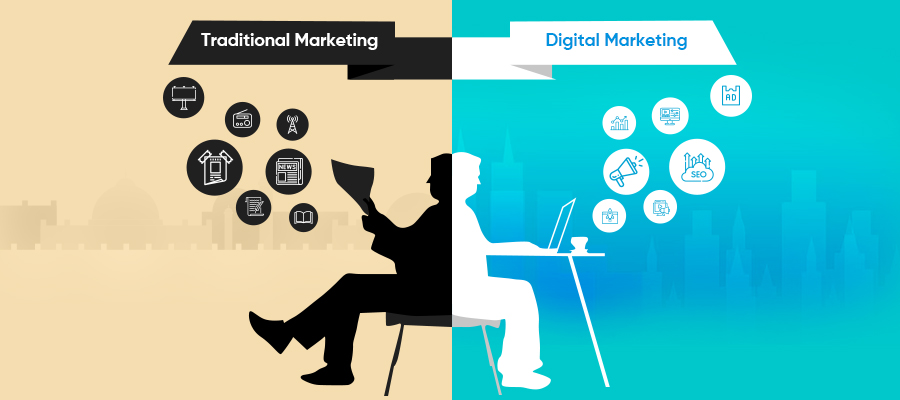
Choosing between traditional and modern marketing depends on business goals, budget, audience, and industry type.
Budget plays a major role in decision-making. Traditional marketing often requires higher ongoing costs for printing and distribution, while modern marketing can be more affordable and scalable, especially for small and medium businesses.
Understanding your target audience is equally important. If your audience is older or located in a specific region, traditional marketing methods like radio, print, or billboards may still be effective.
However, if your audience is younger or digitally active, modern marketing strategies will deliver better results.
Industry type also influences the choice. Service-based professionals like lawyers, doctors, or local businesses may benefit from traditional visibility methods.
On the other hand, e-commerce brands, freelancers, and tech companies typically perform better using digital-first strategies.
In many cases, the most effective approach is a combination of both, allowing businesses to maximize reach while maintaining strong digital engagement.
In conclusion, Modern marketing and traditional marketing both play important roles in how businesses connect with customers.
Traditional marketing offers physical presence and broad awareness, while modern marketing delivers precision, scalability, and measurable results.
Related Articles:
Grok vs ChatGPT vs Gemini vs Copilot
E-E-A-T: How to Build Trust and Boost Web & AI Visibility
Advanced AEO Strategies: Winning Citations