Topical Authority: Why Topical Authority Isn’t Enough for AI search
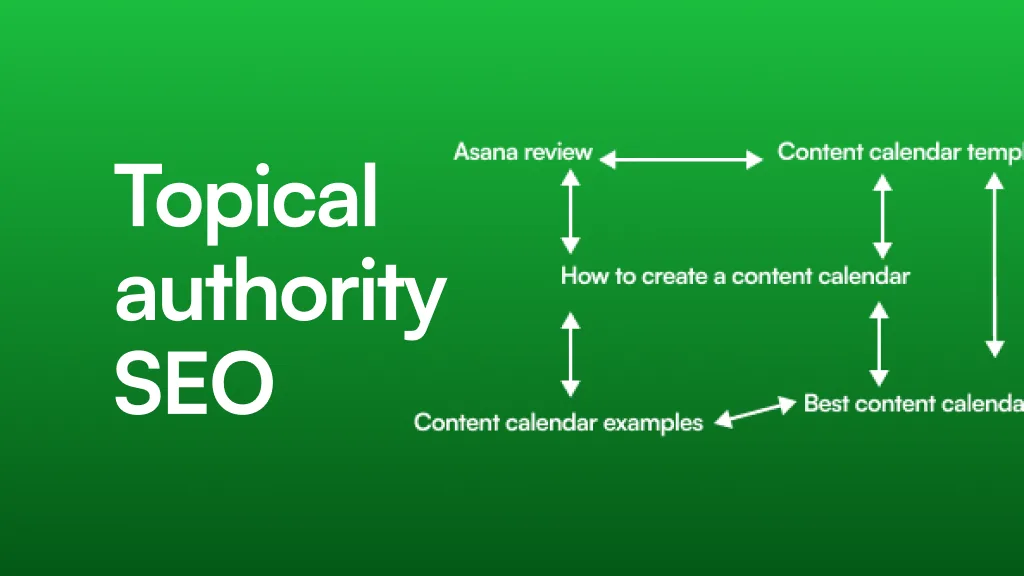
Search engines and AI platforms no longer rank content based only on keywords. Today, they evaluate entities, expertise, credibility, and relevance before deciding which source deserves visibility. This is where topical authority becomes one of the most important concepts in modern SEO.

However, many marketers misunderstand what topical authority truly means. Creating content around a topic is no longer enough. Search engines now evaluate whether your website deserves to be selected over competing sources.
In other words, topical authority helps your content become eligible, but topical ownership determines whether search engines and AI systems actually choose your website.
As AI-powered search continues to evolve across the United States, businesses must move beyond traditional SEO strategies and focus on building authority that combines content depth, trust signals, and strong positioning.
What is Topical Authority?

Topical authority refers to a website’s demonstrated expertise and depth within a specific subject area. Search engines evaluate whether your content consistently covers related concepts, answers user intent thoroughly, and provides valuable insights across an entire topic ecosystem.
For example, a website focused on digital marketing would strengthen its topical authority by publishing connected content about SEO, email marketing, PPC advertising, AI marketing tools, social media strategies, analytics, and customer behavior. Over time, search engines begin associating the website with expertise in that niche.
But in today’s AI-driven search landscape, topical authority alone is not enough. AI systems and search engines must also decide which source to prioritize among dozens of authoritative websites covering similar subjects.
This introduces the idea of topical ownership.
Topical Authority vs. Topical Ownership

Topical authority focuses on the quality and depth of your content. Topical ownership focuses on whether your brand becomes the preferred source within that topic.
Search engines are constantly making selection decisions. AI-powered systems evaluate multiple sources and determine which one appears most trustworthy, credible, and relevant for a specific query.
This means websites are no longer competing only on content quality. They are competing for recognition, reputation, and positioning.
A site may publish excellent content about AI in marketing, but another brand with stronger citations, better visibility, higher trust signals, and broader recognition may still outrank it.
In practical terms, topical authority builds eligibility, while topical ownership drives visibility and selection.
The Three Layers of Topical Authority
Modern SEO experts increasingly recognize that topical authority works across three major layers: coverage, architecture, and positioning.
Coverage refers to how comprehensively a website addresses a topic. Search engines want to see broad and connected content that demonstrates expertise. Businesses that cover only isolated keywords often struggle to establish authority because their content lacks contextual depth.
Architecture focuses on how content is organized. Search engines analyze internal linking, semantic relationships, topic clusters, and site structure to understand how pages connect. A well-structured content ecosystem helps AI systems recognize expertise more efficiently.
Positioning is where authority becomes competitive. This layer includes reputation, credibility, industry mentions, brand recognition, citations, expert contributions, and historical relevance.
Search engines increasingly evaluate how other trusted sources reference your brand before determining whether your content deserves priority.
Together, these three layers form the foundation of strong topical authority in modern SEO.
Why Search Engines Prioritize Entities Over Keywords
Google and AI search systems now rely heavily on entity-based understanding instead of simple keyword matching. An entity can be a person, company, organization, product, or concept that search engines can identify and connect across the web.
This means your brand itself becomes part of the ranking equation. For example, if multiple authoritative websites mention your company as a trusted source for AI in customer service, search engines begin associating your brand with expertise in that field.
Over time, your entity strengthens, improving your ability to rank competitively.
This shift explains why digital PR, expert authorship, podcast appearances, interviews, and industry citations are becoming increasingly important for SEO success in the United States.
The Role of E-E-A-T in Topical Authority
Google’s E-E-A-T framework — Experience, Expertise, Authoritativeness, and Trustworthiness plays a major role in building topical authority.
Search engines evaluate whether your content reflects genuine expertise and whether your website demonstrates credibility within its industry. AI systems also assess signals such as author profiles, professional experience, trusted backlinks, citations, reviews, transparency, and consistent publishing quality.
However, E-E-A-T alone does not guarantee visibility. These signals must connect to a clearly defined topical focus. A website with strong trust signals but weak topical structure may still struggle to rank consistently.
This is why businesses should combine content depth with authority-building strategies that strengthen both their expertise and industry recognition.
Why Original Insights Matter More Than Ever
As AI-generated content becomes more common, original thinking is becoming a major competitive advantage in SEO.
Search engines increasingly favor websites that contribute unique insights, research, perspectives, case studies, and expert analysis rather than repeating information already available online.
Brands that publish original data or introduce new frameworks often build stronger topical authority because other websites naturally reference and cite their work.
This creates a cycle of authority growth. The more your content gets referenced, the more search engines recognize your expertise, and visibility increases.
In the U.S. market, businesses investing in thought leadership, proprietary research, and expert-driven content are gaining a significant advantage in AI-powered search results.
Building Topical Authority for Long-Term SEO Success
Building topical authority requires consistency, strategic planning, and long-term investment.
Businesses should focus on creating comprehensive topic clusters rather than isolated blog posts. Every piece of content should support a broader content ecosystem that reinforces expertise.
Strong internal linking structures, expert authorship, high-quality backlinks, digital PR, and brand mentions all contribute to stronger authority signals. Businesses should also regularly update existing content to maintain accuracy and relevance in rapidly evolving industries.
Most importantly, companies must understand that topical authority is no longer only about publishing more content. It is about becoming the most trusted and recognized source within a niche.
What Are Topic Clusters?
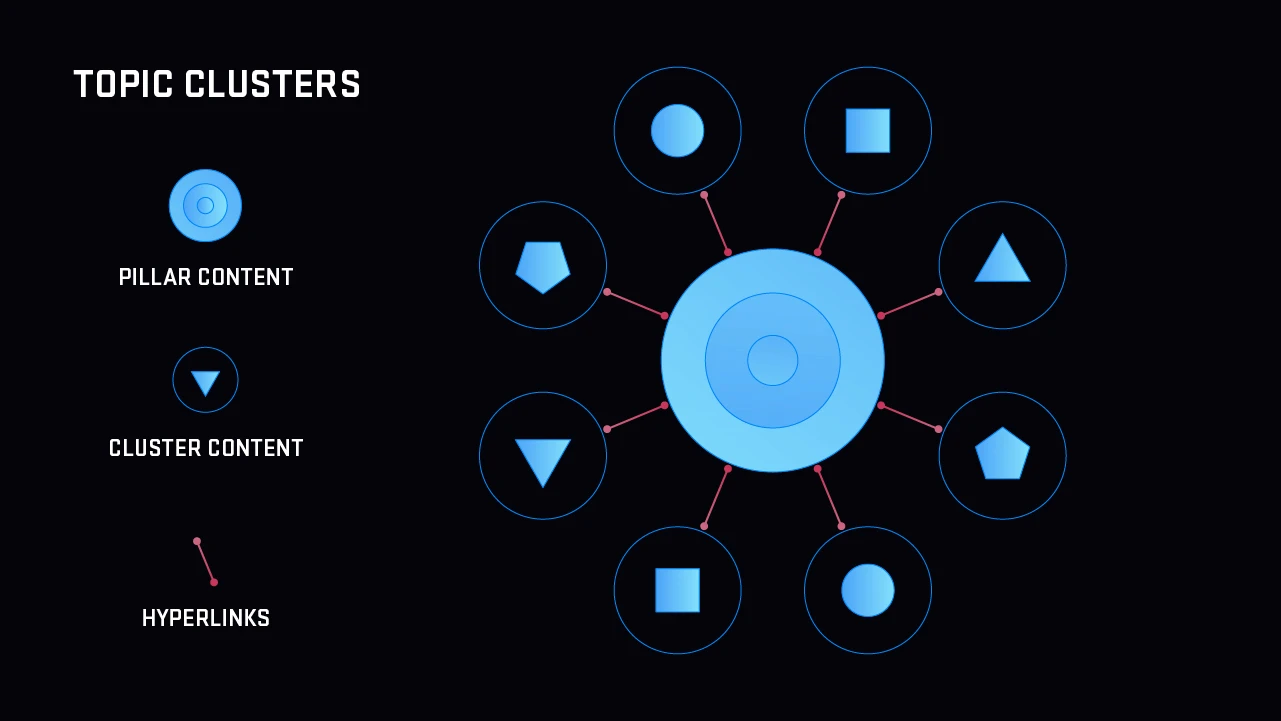
Topic clusters are a modern SEO strategy designed to organize website content around a central subject.
Instead of publishing disconnected articles, businesses create a structured network of related content that helps search engines and AI systems better understand their expertise.
A simple way to think about topic clusters is to imagine a well-organized library. The pillar page acts like the main category section, while supporting articles function as individual books that explore specific ideas connected to the broader topic.
Everything links together logically, making it easier for users to navigate and for search engines to recognize topical depth.
This structure has become increasingly important as AI-powered search engines evolve beyond traditional keyword matching.
Today, platforms like Google analyze relationships between topics, user intent, and semantic relevance before deciding which content deserves visibility.
Understanding the Structure of Topic Clusters
A topic cluster typically begins with a pillar page. This is a comprehensive, long-form resource focused on a broad subject.
The pillar page usually includes detailed explanations, a table of contents, internal links to related articles, and clear navigation paths that guide users deeper into the topic.
For example, a pillar page about “Digital Marketing” may include sections covering SEO, email marketing, social media marketing, AI marketing tools, content creation, and paid advertising.
Rather than explaining every subtopic in extreme detail, the pillar page introduces each area and links to supporting articles that explore those topics more thoroughly.
The supporting content is known as cluster pages. These pages focus on narrower subtopics or specific user questions related to the main theme.
Continuing the digital marketing example, cluster pages might include articles such as “How AI Improves Email Marketing Campaigns” or “Best SEO Strategies for Small Businesses.”
Internal linking is what connects the entire cluster together. Cluster pages link back to the main pillar page, while the pillar page links to each supporting article. This creates a strong semantic relationship between all pages within the topic ecosystem.
Topic Clusters vs. Content Clusters

Many people confuse topic clusters with content clusters, but the two are not exactly the same.
Content clusters are often simple collections of pages mentioning a similar subject. These may include pricing pages, webinars, product sheets, blog posts, or FAQs related to a general category. While useful for organization, they do not always demonstrate deep expertise or strong topical relevance.
Topic clusters are more strategic. They are designed specifically to build topical authority by covering a subject comprehensively and aligning content with user intent.
A strong topic cluster addresses related keywords, synonyms, audience questions, and multiple stages of the customer journey.
Search engines interpret this depth as a signal of expertise, authority, and trustworthiness, which aligns closely with Google’s E-E-A-T principles.
Why Topic Clusters Matter for AI SEO
As AI search continues to reshape SEO, topic clusters have become even more valuable for improving visibility and authority.
AI systems no longer rely solely on exact keyword matches. Instead, they analyze semantic relationships between topics and evaluate whether a website demonstrates genuine expertise within a niche.
When search engines detect multiple interconnected pages discussing related concepts, they gain stronger confidence in the website’s authority.
This semantic understanding improves the likelihood of your content appearing in AI-generated answers, featured snippets, AI Overviews, and conversational search results.
Topic clusters also help AI systems process complex search queries. Modern search engines often break questions into smaller subtopics before generating responses.
A single page optimized for one keyword may not answer every aspect of the query effectively. However, a well-structured topic cluster provides multiple sources of relevant information connected under one broader theme.
As a result, AI systems can pull supporting details from different pages within your cluster, increasing your visibility across a wider range of searches.
How Topic Clusters Improve Search Visibility
Search visibility today extends beyond traditional blue links on Google. AI-powered search experiences increasingly provide summarized answers directly within search interfaces, reducing the number of clicks websites receive.
Because of this shift, brands now compete not only for rankings but also for inclusion in AI-generated responses.
Topic clusters improve your chances of being referenced because they provide structured, in-depth information that AI systems can easily interpret and cite.
Additionally, topic clusters help websites rank for long-tail keywords and conversational searches. Since supporting articles target highly specific questions and search intents, they capture traffic from users searching for detailed information.
This strategy also strengthens internal linking, improves crawlability, increases time spent on site, and creates a better user experience overall.
Building a Topic Cluster Content Strategy
A strong topic cluster strategy is not just about publishing more content; it’s about building a structured content ecosystem that search engines and AI systems can understand, trust, and prioritize.
When done correctly, it improves topical authority, boosts visibility, and creates clear pathways for users to navigate your expertise.
Below is a practical step-by-step framework for building an effective topic cluster strategy.
1. Research your topics and users
Every successful topic cluster starts with deep research. Before creating any content, you need to understand what your audience is searching for and how your competitors are structuring their content.
Start with keyword and topic discovery tools like Google Trends, Google Keyword Planner, Ahrefs, and Semrush to identify core subjects related to your niche. Then go beyond tools and study real user behavior.
Analyze search engine results pages (SERPs), review autocomplete suggestions, and observe “People also ask” questions to uncover how users phrase their queries.
Social listening can also reveal valuable insights. Platforms like X (Twitter), Reddit, and forums often expose real pain points, misconceptions, and emerging questions before they become mainstream search trends.
This research phase helps you uncover content gaps, variations of keywords, semantic relationships, and user intent patterns. The goal is to build a complete picture of the topic landscape before you begin writing.
2. Choose a pillar topic and define your subtopics
Once your research is complete, the next step is selecting a pillar topic. This is the central theme your entire cluster will revolve around. It should be broad enough to support multiple related articles but specific enough to stay focused.
Think of this as a hub-and-spoke model. The pillar page is the hub, while each cluster page is a spoke that explores a narrower subtopic in detail.
For example, if your pillar topic is “AI in marketing,” your cluster pages might include subjects like AI in email marketing, predictive analytics, content generation, customer segmentation, and AI advertising tools.
You should also map your content according to the buyer’s journey. Awareness-stage content introduces concepts, consideration-stage content compares solutions, and decision-stage content focuses on conversions such as product pages, demos, or service pages.
This structure ensures your content supports users at every stage of their journey while strengthening topical relevance.
3. Create comprehensive, intent-focused content
Your pillar page should serve as the most complete resource on your chosen topic. It should not just summarize ideas but fully explain the subject in a way that answers multiple user intents in one place.
A strong pillar page includes a clear structure, a table of contents, and internal links to supporting articles. It should also include calls to action that guide users deeper into your website.
Cluster pages, on the other hand, should focus on specific subtopics or questions. Each page should provide depth, clarity, and practical value. Instead of chasing keywords alone, focus on solving real user problems.
Use headings that reflect real search queries and structure your content for readability. AI systems and modern search engines prefer well-organized, concise, and semantically clear content.
Where possible, include supporting formats like images, videos, charts, or infographics to enhance understanding and improve engagement.
4. Implement a strong internal linking structure
Internal linking is what transforms a group of articles into a true topic cluster.
Every cluster page should link back to the pillar page to reinforce its importance.
The pillar page should also link out to all supporting cluster pages to distribute authority evenly across the topic ecosystem.
In addition, cluster pages should link to each other where relevant. This creates a semantic network that helps both users and search engines understand how your content is connected.
Use clear and descriptive anchor text that reflects the topic of the destination page. This improves crawlability, strengthens relevance signals, and helps AI systems interpret content relationships more accurately.
A well-structured internal linking system is one of the strongest signals of topical authority.
5. Optimize, measure, and continuously improve
Publishing content is only the beginning. A topic cluster strategy requires ongoing optimization to remain effective in a rapidly evolving search environment.
Monitor how your content performs in search engines as well as AI-driven platforms. Track rankings, organic traffic, engagement metrics, and visibility in AI-generated results.
Look for gaps where new content can be added or existing pages can be improved. You may need to update older articles, expand sections, or introduce new cluster pages as industry trends evolve.
For example, as new technologies emerge, such as AI-powered tools or changing consumer behavior, your cluster should evolve to reflect those changes.
Continuous improvement ensures your content remains relevant and competitive over time.
Content Clustering Best Practices
Beyond the core framework, there are several best practices that help strengthen your topic cluster strategy and improve long-term performance.
First, aim to cover the entire topic landscape, not just a limited set of keywords. Include variations, synonyms, related concepts, and real user questions to fully demonstrate expertise.
Second, align every piece of content with user intent. Awareness content should educate, consideration content should compare and explain options, and decision-stage content should guide conversions.
Third, optimize for E-E-A-T by demonstrating experience, expertise, authority, and trustworthiness. This can be achieved through case studies, original data, expert insights, and real-world examples that validate your content.
Fourth, write in a format that works for both humans and AI systems. Use short paragraphs, clear headings, and structured formatting to improve readability and machine understanding.
Finally, keep your content updated. Search trends, AI systems, and user behavior evolve constantly, so your topic clusters must evolve with them to maintain authority and visibility.
Related Searches: