AI Agents vs AI Assistants: What Beginners Should Use
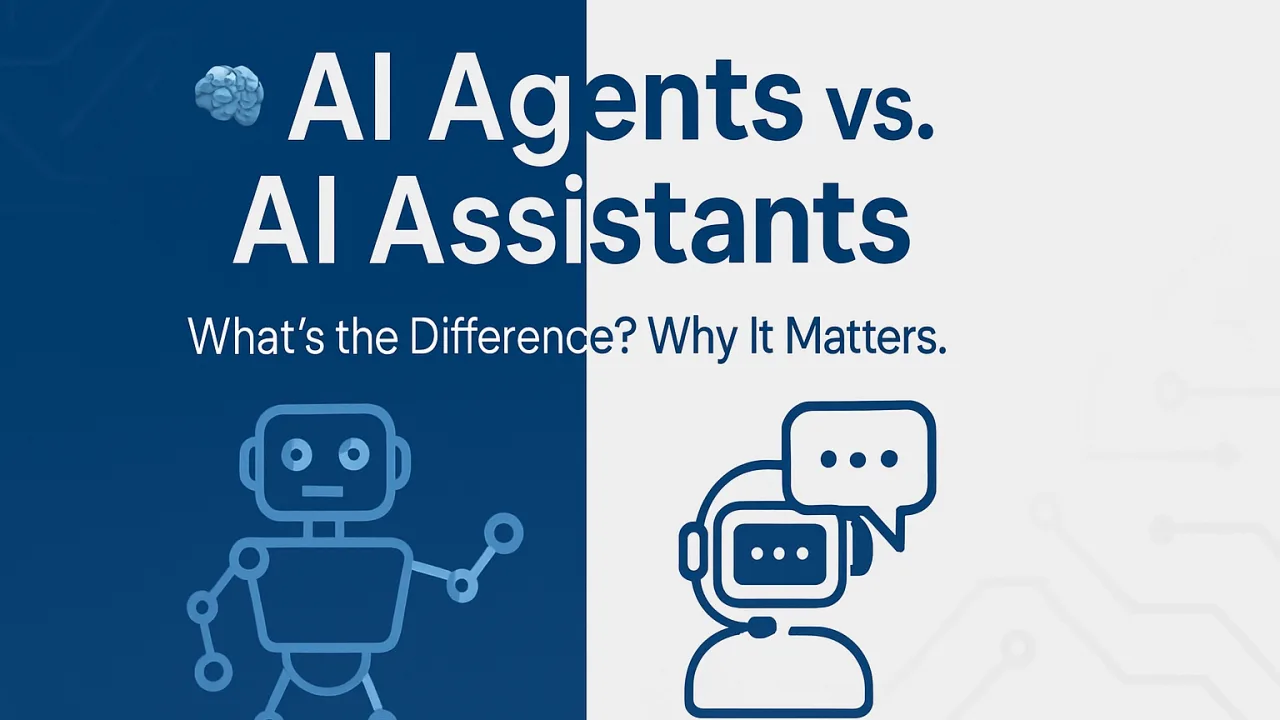
Think of a world where you are a celebrated film icon or a top-tier football legend. In that reality, you rarely operate alone.
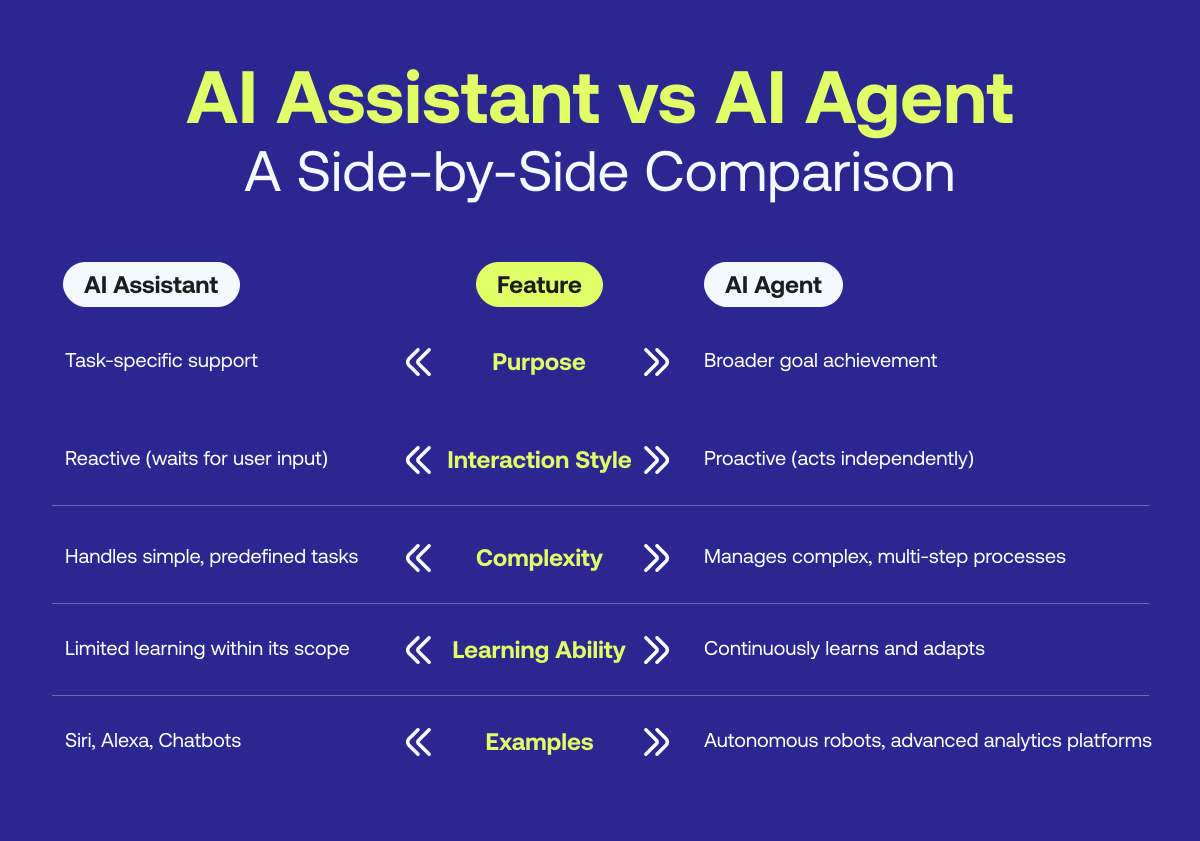
You’re surrounded by two distinct figures: an assistant and an agent. Though both serve you, their roles diverge sharply.
Your assistant works on the instructions. They respond to your requests, booking reservations, collecting laundry, sorting through fan correspondence, and keeping your calendar in order. Their world is reactive, built around tasks you explicitly assign.
Your agent, however, operates on a different wavelength entirely. They are strategic. Constantly scanning for opportunities, refining your brand presence, negotiating deals, and positioning yourself for greater visibility and income.
They don’t wait for prompts to begin work. In fact, much of what they do unfolds beyond your awareness, quietly advancing your career in the background.
This distinction mirrors the evolving relationship between AI assistants and AI agents.
AI assistants function as responsive tools. You ask, they answer. You command, they execute. AI agents, on the other hand, are designed for autonomy.
They pursue defined objectives independently, adjusting their methods as conditions change, and continuing their operations without needing constant human direction.
Together, they form a powerful synergy, much like the relationship between talent, support, and strategy in the entertainment world. One handles execution, the other drives momentum.
In modern digital ecosystems, both play a crucial role in enhancing productivity for individuals and organizations alike.
What is an AI Assistant?
An AI assistant is essentially an intelligent system engineered to interpret natural language and respond through conversational interfaces.
Tools like Amazon Alexa and Apple Siri exemplify this category, enabling users to interact with technology through speech or text in a seamless manner.
Earlier generations of these systems relied heavily on rigid rule sets, prewritten responses, and narrowly defined task libraries. Today, however, they are largely powered by machine learning architectures and advanced foundation models, making them far more adaptable and linguistically capable.
At the core of many modern assistants are large language models (LLMs), a specialized subset of foundation models. These systems, such as OpenAI models, Meta’s Llama series, or IBM’s Granite models, allow assistants to interpret complex queries, generate coherent responses, and support tasks ranging from writing support to analytical reasoning.
In practical environments, AI assistants help streamline workflows, reduce repetitive effort, and improve access to information. In business contexts, they can even assist with data interpretation, transforming raw datasets into digestible insights.
Modern examples include Microsoft Copilot and IBM Watson Assistant, alongside conversational systems like ChatGPT, which all operate through natural language interaction and API integrations.
Key Characteristics of AI Assistants
Conversational interaction defines their core design. These systems leverage natural language processing to engage users in dialogue-based exchanges, often through chatbot interfaces embedded in apps or enterprise tools.
They are fundamentally prompt-dependent. Without user input, they remain idle—waiting for direction before initiating any meaningful action. Every output is tied to a specific query or instruction.
They also offer recommendation capabilities. Based on accessible data, they can propose insights, suggest actions, or generate summaries. However, their outputs should typically be reviewed for precision and context accuracy.
Another important dimension is adaptability through tuning. Instead of retraining an entire model, developers can refine behavior using fine-tuning or prompt-tuning techniques, allowing the assistant to specialize in particular tasks or industries.
Limitations of AI Assistants
Despite their sophistication, AI assistants operate within clear boundaries. First, they lack true autonomy. They do not initiate actions on their own; every function is triggered by explicit instruction.
Even when integrated with external tools, such as spreadsheets or databases, they still require a defined prompt to act.
Second, they generally do not possess enduring memory. While some systems can temporarily reference prior interactions within a session, they do not continuously evolve from user engagement.
Improvements typically come only through updated model versions released by developers, rather than self-directed learning over time.
In essence, AI assistants are powerful yet dependent systems, highly capable within their scope, but ultimately reactive rather than self-directing.
How AI Agents Work
Unlike AI assistants that require constant prompting for every action, AI agents operate with a higher degree of independence.
Once given an initial goal or “kickoff prompt,” an AI agent begins by interpreting the objective, breaking it down into smaller tasks, and constructing a structured workflow. From there, it determines the best sequence of actions required to reach the desired outcome.
Throughout this process, AI agents may interact with external tools, databases, APIs, and software systems. They evaluate progress, adjust strategies, and refine their approach as new information becomes available.
This ability to plan, execute, and adapt makes AI agents particularly valuable in enterprise environments, where they are increasingly deployed for software automation, IT operations, data analysis, customer service optimization, and even code generation.
Key Features of AI Agents
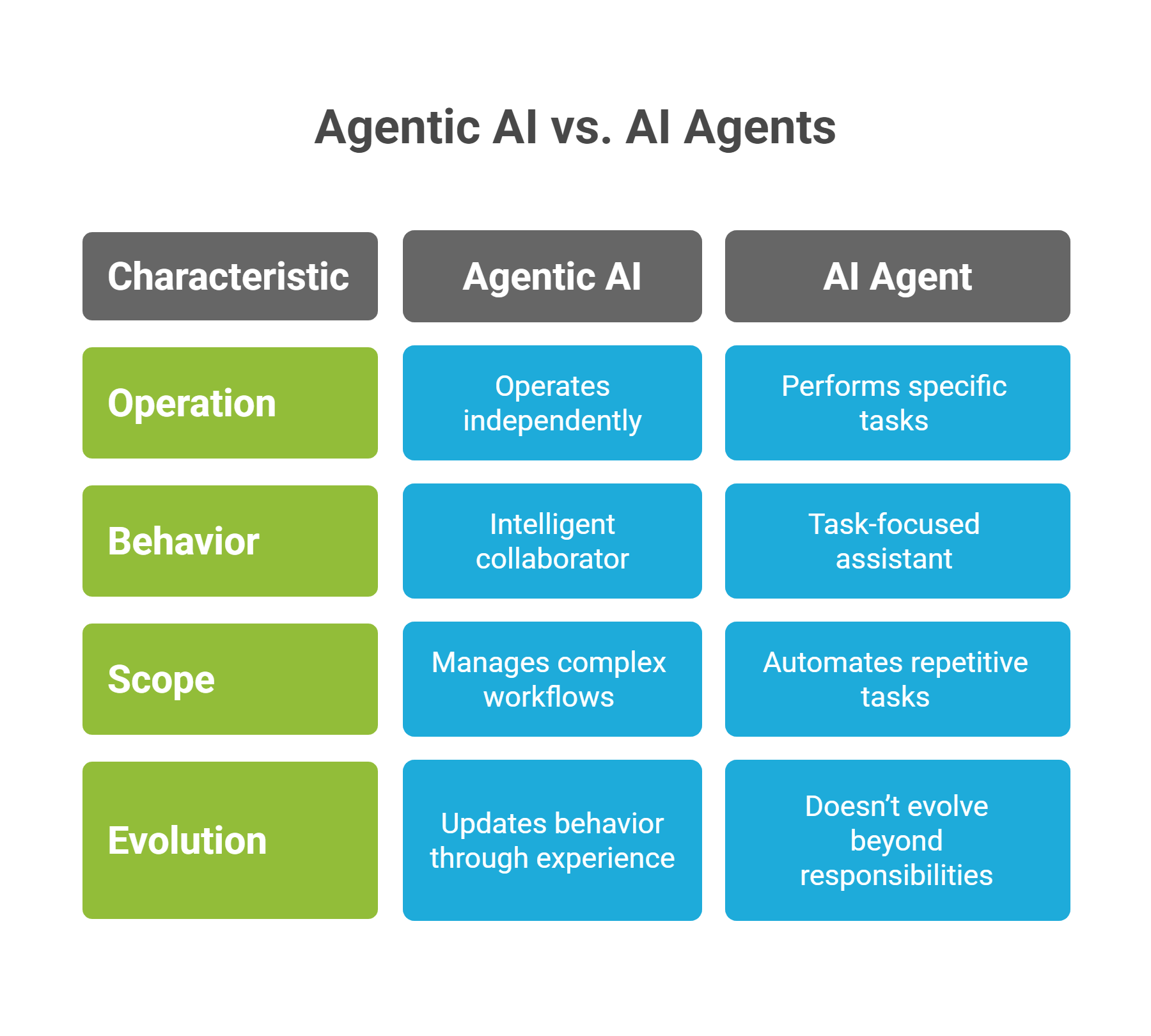
Here are some of the key features of AI Agents:
1. Greater Autonomy
One of the defining traits of AI agents is their ability to operate independently after receiving an initial instruction.
Unlike AI assistants that require continuous user interaction, agents can persistently work toward goals with minimal supervision.
They reason through problems, make decisions, and execute multi-step actions using external tools and datasets, significantly reducing human workload in complex processes.
2. System Connectivity
AI agents are not confined to a single interface or chat environment. Instead, they integrate with a wide ecosystem of applications, APIs, and data sources.
This interconnectedness allows them to streamline workflows, eliminate operational silos, and coordinate actions across multiple platforms simultaneously.
3. Independent Decision-Making and Execution
What distinguishes AI agents from advanced language models is not just tool usage, but autonomous decision-making.
Agents determine which tools to use, when to use them, and how to sequence their actions. They deconstruct complex problems into manageable components, plan execution strategies, and carry them out with limited intervention.
In some advanced systems, agents can even operate computer environments directly, clicking, typing, and navigating interfaces to complete tasks.
4. Persistent Memory and Adaptive Learning
AI agents are designed to retain information across interactions. Through persistent memory systems, they can recall past actions, conversations, and outcomes.
This enables them to improve performance over time. Combined with adaptive learning, agents refine their behavior based on feedback and real-world results, making them increasingly efficient and context-aware.
5. Task Chaining and Workflow Decomposition
Rather than treating tasks as isolated events, AI agents break complex objectives into structured sequences.
They identify dependencies between steps and ensure that each action logically feeds into the next. This ability allows them to manage multi-stage workflows with precision and consistency.
6. Multi-agent Collaboration
In advanced implementations, AI agents can collaborate with one another, each specializing in a specific function. One agent might focus on research, another on validation, and another on execution.
Together, they form coordinated systems capable of handling sophisticated challenges. Modern frameworks such as LangChain and LlamaIndex are enabling more accessible agent orchestration, allowing even non-technical users to build multi-agent systems in low-code environments.
Benefits of AI Agents and AI Assistants
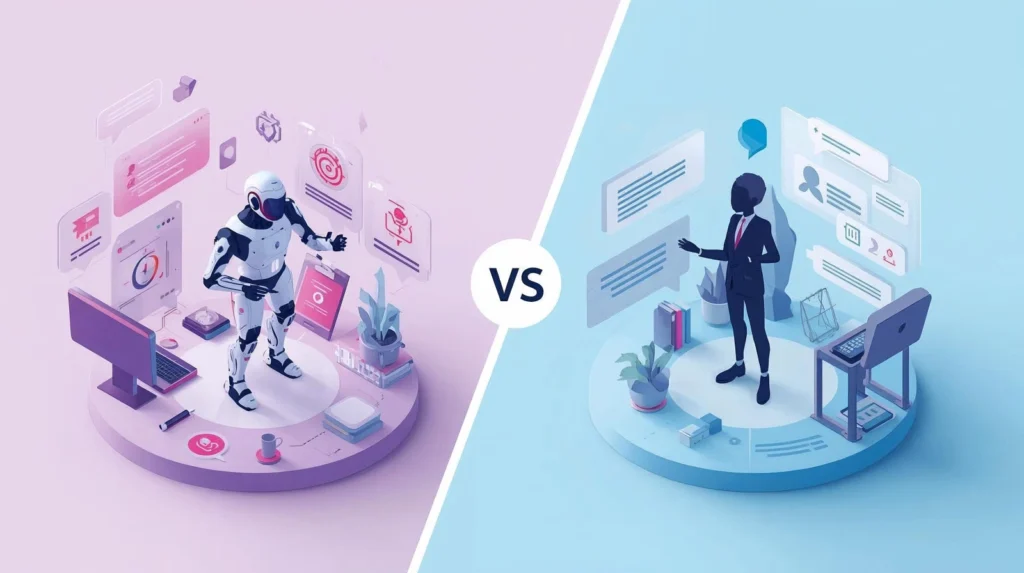
Although AI agents and AI assistants differ in capability, they are most powerful when used together.
1. Complementary Intelligence Systems
AI assistants excel at human interaction and task execution through conversation, while AI agents specialize in autonomous decision-making and workflow management.
When combined, they create a layered AI ecosystem that enhances both usability and intelligence.
2. Improved Productivity and Workflow Efficiency
Both systems streamline operations by automating repetitive tasks and supporting decision-making.
AI assistants help users complete tasks faster, while AI agents handle end-to-end processes with minimal oversight.
3. Enhanced User Experience
AI assistants provide intuitive, conversational support that adapts to user needs in real time. This makes digital interactions more seamless, personalized, and accessible across platforms.
4. Autonomous Scalability
AI agents can operate continuously and manage multiple workflows simultaneously, making them ideal for scaling operations without proportional increases in human effort.
5. Smarter Collaboration Between Systems
AI agents can delegate tasks to assistants, while assistants feed structured data back into agent workflows. This creates a continuous loop of coordination that improves accuracy, speed, and efficiency.
6. Stronger System Integration
As AI technologies evolve, the integration between assistants and agents is becoming more fluid.
This convergence enables smoother transitions between human interaction and autonomous execution, resulting in more intelligent and responsive systems.
Related Searches:
Modern Local SEO & AI Visibility
How to Optimize Your Small Business for AI-Powered Search