AI Strategy for Business: Building a Future-Ready AI Roadmap

AI is no longer a futuristic concept reserved for technology giants. It has become a strategic business asset capable of transforming operations, enhancing decision-making, strengthening customer relationships, and unlocking entirely new growth opportunities.

However, successful AI adoption does not happen by accident. It requires a deliberate and structured plan. This is where an AI strategy becomes essential.
What Is an AI Strategy?
An AI strategy serves as a comprehensive blueprint that outlines how an organization will leverage artificial intelligence to achieve specific business objectives.
Rather than focusing solely on technology implementation, it provides a clear framework for integrating AI into business processes, extracting meaningful insights from data, improving operational efficiency, and creating superior experiences for both employees and customers.
Organizations that develop a well-defined AI strategy are better positioned to maximize the value of their AI investments while avoiding common pitfalls associated with fragmented or poorly coordinated initiatives.
Why an AI Strategy Has Become Essential
In today's rapidly evolving digital landscape, adopting AI without a strategic direction can result in wasted resources, disconnected projects, and disappointing outcomes. A formal AI strategy brings focus and alignment, ensuring that every AI initiative contributes directly to broader organizational goals.
Businesses that establish a clear AI roadmap can prioritize high-impact opportunities, allocate resources more effectively, and accelerate innovation across departments. More importantly, an AI strategy helps organizations prepare for the profound changes AI introduces to workflows, job roles, and customer expectations.
As competition intensifies across industries, companies without a structured AI approach risk falling behind more agile competitors that are already leveraging intelligent technologies to optimize operations and improve customer engagement.
A strategic framework reduces implementation risks, increases adoption rates, and accelerates the realization of measurable business value.
The Five Pillars of a Successful AI Strategy
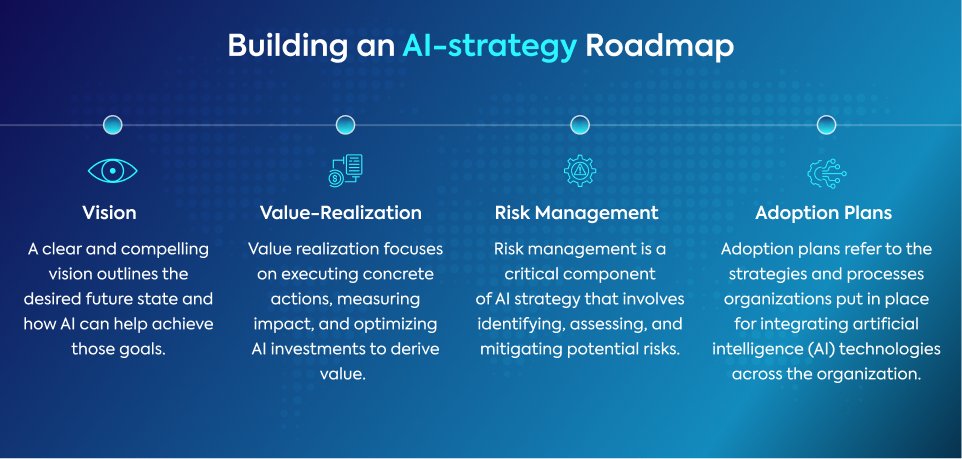
Creating a trustworthy and sustainable AI ecosystem requires a foundation built on principles that inspire confidence among employees, customers, regulators, and stakeholders. Five core pillars form the backbone of an effective AI strategy.
1. Explainability
Trust in artificial intelligence begins with understanding. Explainability ensures that AI systems can clearly communicate how decisions, recommendations, or predictions are generated. When stakeholders understand the reasoning behind AI-driven outcomes, they are more likely to trust and adopt the technology.
Transparent explanations are particularly important in sectors such as healthcare, finance, and public services, where AI recommendations can significantly impact people's lives. Organizations that prioritize explainability create stronger accountability and foster greater confidence in their AI systems.
2. Fairness and Bias Mitigation
Artificial intelligence models learn from data, and if that data contains biases, those biases can be amplified through AI-generated decisions. Ensuring fairness requires organizations to continuously evaluate datasets, algorithms, and outcomes to identify and eliminate discriminatory patterns.
A responsible AI strategy promotes inclusivity by ensuring that decisions are equitable across different demographic groups. By proactively addressing bias, businesses can reduce reputational risks, strengthen customer trust, and support ethical innovation.
3. Reproducibility
Reliability is a cornerstone of successful AI implementation. Reproducibility means that an AI model consistently generates the same results when presented with identical conditions and data inputs.
This consistency is crucial for validating findings, auditing performance, and maintaining confidence in AI-powered systems. Organizations that emphasize reproducibility create dependable AI environments that support long-term operational stability.
4. Transparency
Transparency extends beyond explaining AI decisions. It involves openly communicating how data is collected, how models are trained, and how AI technologies are deployed throughout the organization.
Transparent practices help businesses comply with evolving regulations while strengthening relationships with customers, partners, and investors. Openness regarding AI processes demonstrates accountability and reinforces organizational credibility.
5. Sustainability
A forward-thinking AI strategy must consider both immediate and long-term impacts. Sustainability involves designing AI systems that are resource-efficient, environmentally responsible, and aligned with broader corporate social responsibility objectives.
Organizations should evaluate the energy consumption of AI models, their societal implications, and their contribution to long-term business resilience. Sustainable AI initiatives not only reduce environmental impact but also strengthen brand reputation and stakeholder trust.
How to Build and Launch an Effective AI Strategy

Developing an AI strategy requires careful planning and cross-functional collaboration. Organizations should follow a structured process that aligns technological capabilities with business priorities.
1. Explore AI Technologies and Opportunities
The first step involves understanding the diverse range of AI technologies available today. From machine learning and natural language processing to computer vision and predictive analytics, each capability offers unique opportunities to solve business challenges.
Leaders should identify areas where AI can improve efficiency, reduce costs, enhance customer experiences, or create competitive advantages. This exploratory phase establishes the foundation for future AI investments.
2. Assess Organizational Readiness
Before launching AI initiatives, organizations must evaluate their current state of preparedness. This assessment should examine data quality, infrastructure capabilities, workforce skills, and existing technological assets.
Understanding organizational strengths and limitations enables leaders to develop realistic implementation plans while identifying critical gaps that require attention.
3. Define Clear Business Objectives
Successful AI initiatives are tied directly to measurable outcomes. Whether the goal is increasing revenue, improving customer retention, enhancing productivity, or reducing operational expenses, clear objectives provide direction and accountability.
Establishing specific performance indicators allows organizations to track progress and demonstrate return on investment throughout the implementation journey.
4. Identify Strategic Partners and Vendors
Not every organization possesses the internal expertise required to build sophisticated AI solutions from scratch. Strategic partnerships can provide access to specialized technologies, industry knowledge, and implementation support.
Carefully selecting vendors and technology partners can significantly accelerate deployment timelines while reducing risk and improving project outcomes.
5. Develop a Comprehensive AI Roadmap
A successful AI strategy requires a detailed roadmap that outlines priorities, timelines, milestones, and resource allocation. Organizations should begin with pilot projects that offer quick wins before expanding into more complex applications.
A phased approach minimizes disruption, allows for continuous learning, and creates momentum for broader AI adoption across the enterprise.
6. Secure Executive and Stakeholder Buy-In
AI transformation requires support from leadership and engagement across all levels of the organization. Presenting a compelling vision that highlights both strategic benefits and practical business outcomes is essential for securing stakeholder commitment.
When employees understand how AI will enhance rather than replace their work, adoption becomes significantly smoother and more successful.
Common Challenges in Developing an AI Strategy

Despite the immense potential of artificial intelligence, organizations often encounter obstacles during implementation.
1. Data Quality and Accessibility
AI systems rely heavily on high-quality data. Unfortunately, many organizations struggle with fragmented datasets, inconsistent records, and inaccessible information stored across multiple systems.
Without reliable data foundations, even the most advanced AI models can produce inaccurate or misleading results.
2. Limited AI Literacy
A lack of understanding about AI capabilities and limitations can create resistance throughout an organization. Employees may fear job displacement, while decision-makers may have unrealistic expectations regarding outcomes.
Investing in education, training, and awareness programs helps build confidence and encourages widespread adoption.
3. Absence of a Unified Vision
When departments pursue AI projects independently, initiatives often become disconnected and fail to deliver meaningful value. A shared vision ensures alignment across teams and creates a cohesive framework for innovation.
4. Talent Shortages
The demand for AI specialists continues to outpace supply. Organizations frequently face challenges in recruiting data scientists, machine learning engineers, AI architects, and other specialized professionals.
Addressing this gap requires a combination of hiring, upskilling, and strategic partnerships.
Best Practices for Maximizing AI Return on Investment
Organizations seeking to maximize the value of AI should focus on several proven best practices.
Creating a data-driven culture encourages employees to view information as a strategic asset rather than a byproduct of business operations.
Strong data governance practices ensure that AI systems have access to accurate, secure, and relevant information.
AI should also be embedded into core business processes rather than operating as isolated experiments. Integrating intelligent technologies into daily workflows improves efficiency, enhances decision-making, and drives sustainable business value.
Equally important is maintaining a commitment to responsible AI. Ethical guidelines, robust security measures, transparency policies, and privacy protections help build trust while minimizing regulatory and reputational risks.
Related Searches: