Json-ld Schema Markup: For Brand Visibility

Schema markup used to be primarily about earning rich snippets in Google search results, such as star ratings, FAQ dropdowns, and recipe cards. While Google has removed many of these SERP features, a common misconception is that schema markup is no longer important.
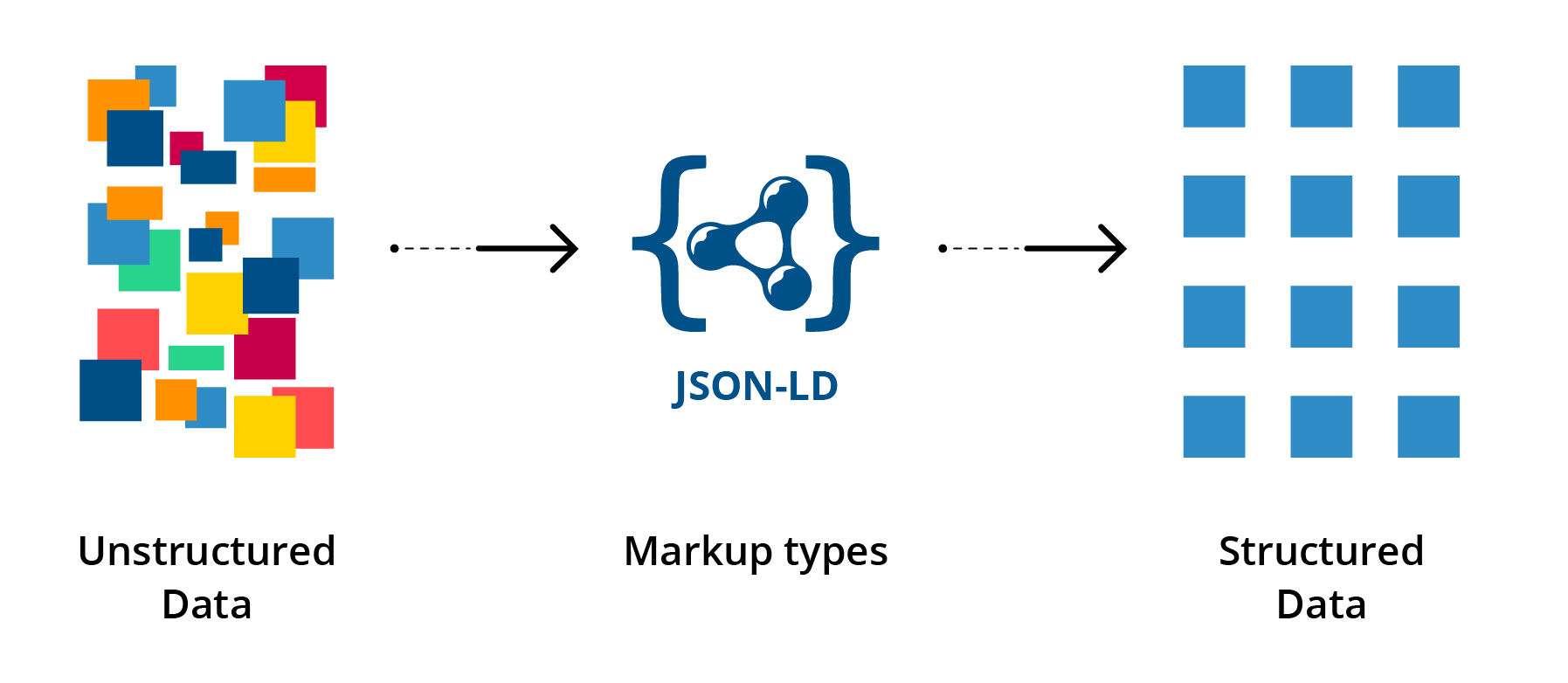
In reality, the opposite is true. Its role has evolved and become even more significant because large language models (LLMs) can interpret structured data far more accurately than unstructured content.
When platforms like ChatGPT, Perplexity, and Google AI Overviews generate answers about your business, they need to identify key facts such as who you are, what you do, where you operate, what services you provide, and what customers say about you.
When these details are presented through JSON-LD structured data with clearly defined types, properties, and relationships, AI systems can extract them with a high degree of confidence.
If the same information is buried within marketing copy, AI must infer the meaning, increasing the likelihood of ambiguity, errors, or exclusion from AI-generated responses.
Pages with valid structured data are significantly more likely to appear in AI-generated search experiences than equivalent pages without schema markup.
Schema markup now serves as the bridge between traditional SEO and LLM Optimization, helping both search engines and AI systems understand your business.
For organizations focused on online visibility in 2026 and beyond, comprehensive structured data is no longer optional; it is foundational.
What Is Schema Markup (JSON-LD)?

Schema markup is a standardized vocabulary, defined by Schema.org, that describes entities, relationships, and facts on a webpage in a machine-readable format. JSON-LD (JavaScript Object Notation for Linked Data) is Google's recommended implementation method.
It is added within a script tag in a page’s HTML and provides structured information about the page and the entities it represents.
For example, your homepage may contain JSON-LD that identifies your business as a ProfessionalService entity, including details such as your company name, founding date, location, and areas of expertise. This gives search engines and AI systems a clear and authoritative fact sheet without requiring them to interpret the information from surrounding content.
Schema operates through a graph-based structure. Individual entities such as Organization, Person, WebPage, FAQPage, and Service are connected through defined relationships like publisher, author, provider, and mainEntityOfPage.
When implemented correctly, this structured graph mirrors the way search engines and AI systems organize knowledge internally.
This is why schema markup and entity SEO are closely connected; schema is the language used to communicate entity information to machines.
Schema Types That Matter for SEO and AI Visibility

Not all schema types provide the same value. Some help generate rich results in search engines, while others are particularly useful for AI systems that rely on structured information.
The most effective implementations support both traditional search visibility and AI discovery.
1. Entity Foundation Types
1. Organization / ProfessionalService / LocalBusiness
These schema types establish your core business identity, including your name, address, phone number, social profiles, areas served, expertise, and contact details.
They are among the most important schema types for both Google Knowledge Panels and AI entity recognition because they clearly define who you are.
2. Person
Person schema is essential for founders, authors, executives, and key team members. It strengthens E-E-A-T signals by connecting content to identifiable experts with verifiable credentials and affiliations.
3. Website / WebPage
These foundational schema types help search engines and AI systems understand the structure of your website and the relationships between pages, content, and business entities.
2. Content Enrichment Types
1. FAQPage
Even though Google has reduced FAQ rich results, the FAQPage schema remains highly valuable for AI visibility. Clearly structured questions and answers provide AI systems with reliable information that can be cited directly in generated responses.
2. HowTo
HowTo schema organizes instructional content into structured, step-by-step processes. This makes it easier for AI systems to understand and present procedural information accurately.
3. Article / BlogPosting
Article schema provides important metadata, including the author, publisher, publication date, headline, and description. This information helps establish content credibility and provenance.
2. VideoObject
For businesses using video marketing, the VideoObject schema provides structured details such as title, description, duration, thumbnail, and upload date. This improves discoverability for both search engines and AI systems.
3. Commercial and Specialist Types
1. Service
Service schema identifies the services your organization offers and links them directly to your business entity. This helps AI systems determine relevance when responding to commercial and location-based queries.
2. Product / Software Application
For e-commerce and SaaS businesses, Product schema provides structured information such as pricing, availability, specifications, and reviews. This data supports both rich search results and AI-generated product recommendations.
3. Review / AggregateRating
Reviews and ratings provide machine-readable trust signals. Explicit review data is often more valuable to AI systems than unstructured testimonials because it can be easily measured and compared.
4. BreadcrumbList
Breadcrumb schema helps define your site's navigation hierarchy and provides additional context about content relationships and topic organization.
5. Event / Course
Businesses that host events, webinars, workshops, or training programs can use the Event and Course schema to provide structured information about schedules, locations, registration details, and availability.
Why Most Schema Implementations Fail
Many websites have schema markup, but much of it is poorly implemented. Common issues include duplicate Organization entities, disconnected schema nodes, missing required properties, blank FAQ sections, and invalid JSON-LD code.
One of the most damaging mistakes is duplication. If multiple plugins or themes generate conflicting Organization schema with different business details, search engines and AI systems receive mixed signals about your brand.
A successful implementation should focus on validation, consistency, proper entity relationships, and the elimination of duplicate or conflicting schema outputs. Clean, accurate, structured data gives AI systems confidence in the information they extract and present.
Schema as the Bridge Between SEO and AI Visibility

Schema markup is no longer just an SEO tactic, it is the connection between your website and every machine that consumes information from it. Google, Bing, ChatGPT, Perplexity, Gemini, and AI agents all rely on structured data to understand entities and relationships.
When implemented correctly, schema supports Search Engine Optimization (SEO), Generative Engine Optimization (GEO), Answer Engine Optimization (AEO), AI Overview Optimization, and AI Agent Optimization simultaneously.
Entity SEO defines what your business is and what it is known for. Schema markup communicates those facts in a machine-readable format. Technical SEO ensures those facts are delivered efficiently and accurately.
Together, these disciplines create a trusted knowledge framework that supports visibility across both search engines and AI-powered platforms.
Our Schema Implementation Process
We treat schema markup as critical infrastructure rather than an afterthought. Every implementation follows a structured process:
- Audit existing schema and identify conflicts.
- Define the entity graph and relationships.
- Implement JSON-LD with consistent @id references.
- Eliminate duplicate schema generated by themes or plugins.
- Validate markup using industry-standard testing tools.
- Monitor performance and maintain accuracy over time.
For WordPress websites, schema is best implemented at the theme level using structured fields rather than relying entirely on plugins. This approach provides greater control, reduces conflicts, and ensures long-term consistency.
The result is clean, reliable, structured data that works alongside your content to improve search visibility, strengthen AI recognition, and support future digital platforms as AI continues to evolve.
Related Searches: